What Is Epoxy Flooring? Complete Guide 2025
Are you looking for a durable flooring solution that can transform your garage, basement, or commercial space? Epoxy flooring might be exactly what you need. This comprehensive guide covers everything about epoxy flooring, from its composition to installation and costs.
What Is Epoxy Flooring? Explained
Epoxy flooring is a high-performance coating system made from epoxy resin and polyamine hardener. When these two components are mixed, they create a chemical reaction that forms an extremely durable, seamless surface that bonds to concrete floors.
The result is a floor that's 2-3 times stronger than concrete alone and can last 15-25 years with proper installation. Originally developed for industrial use, epoxy flooring is now popular in residential garages, commercial spaces, and warehouses.
What Is Epoxy Flooring and Its Key Characteristics
- Non-porous, seamless surface
- Superior chemical and stain resistance
- High-gloss finish that brightens spaces
- Available in unlimited colors and patterns
Types of Epoxy Flooring Systems
1
Self-Leveling Epoxy
Perfect for creating smooth, seamless surfaces in commercial and retail spaces. This system automatically levels out minor surface imperfections and creates a mirror-like finish.
2
Flake Epoxy (Chip Flooring)
The most popular choice for residential garages. Colored vinyl flakes are broadcast into the wet epoxy, providing texture, slip resistance, and helping hide dirt and imperfections.
3
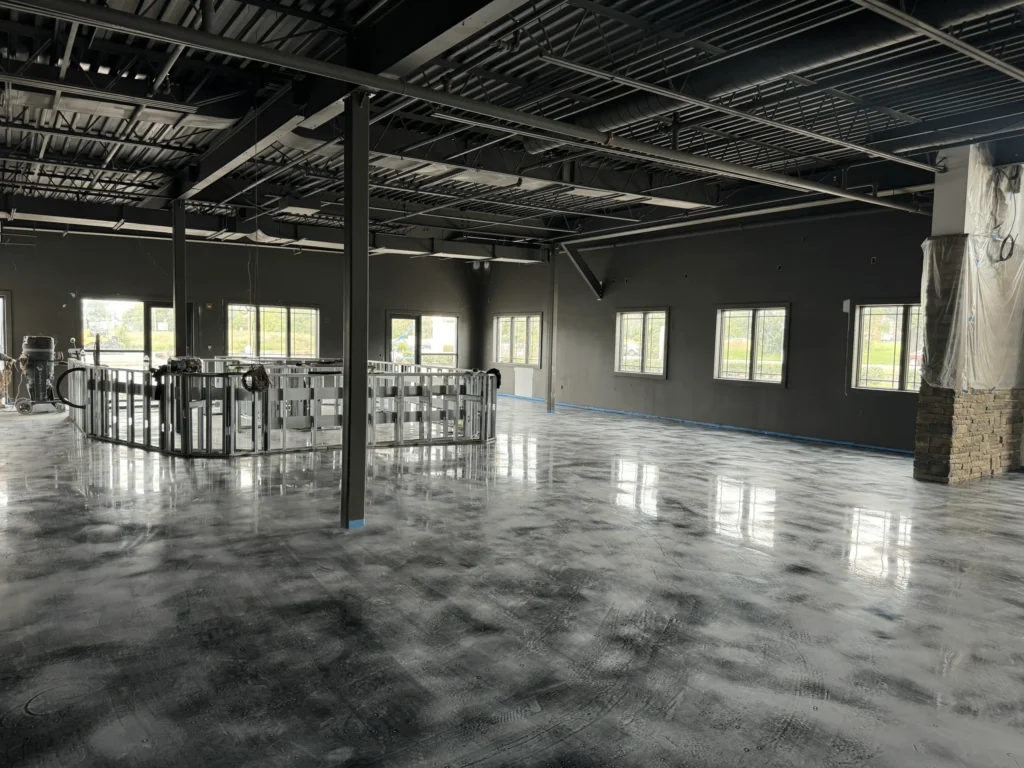
Metallic Epoxy
Creates stunning, three-dimensional effects that resemble marble or flowing metal. Each installation is unique, making it perfect for high-end residential and commercial applications.
4
Quartz-Filled Epoxy
Incorporates colored quartz granules for maximum durability and slip resistance. Ideal for high-traffic commercial areas like restaurants and laboratories.
Key Benefits of
Epoxy Flooring
Exceptional Durability
Epoxy floors can withstand:
- Heavy machinery and equipment
- Chemical spills including oils and solvents
- Impact from dropped tools and equipment
- Temperature fluctuations from -10°F to 140°F
Easy Maintenance
- Simple cleaning with soap and water
- Stain-resistant surface prevents permanent staining
- No waxing required - maintains shine naturally
- Seamless surface eliminates dirt-trapping grout lines
Chemical Resistance
Epoxy flooring resists damage from:
- Motor oil and transmission fluid
- Battery acid and cleaning chemicals
- Salt and de-icing compounds
- Food acids and beverages
Cost-Effectiveness
- Lower long-term costs compared to tile or carpet
- Minimal maintenance saves time and money
- Increases property value especially in garages
- Energy savings from improved light reflection
Which type epoxy is
best for you?
The choice of epoxy type will depend on your specific needs. If you’re looking for durability, Epoxy 100% solids self-leveling is ideal. For industrial spaces, is the best option.
Why Hire a Professional
Epoxy Flooring Company?
Installing epoxy floors is a job that should be done with expertise. Working with a professional company ensures that:
- High-quality materials are used.
- All safety regulations are met.
- A warranty and insurance are provided.
Epoxy Flooring
Installation Process
Surface Preparation
Most critical step - determines success or failure
- Diamond grinding to open concrete pores
- Crack repair and filling
- Thorough cleaning and degreasing
- Moisture testing (must be under 4%)
Primer Application
- Specialized primer ensures proper adhesion
- Applied with rollers or spray equipment
- Cures for 4-8 hours before next step
- Critical for long-term performance
Base Coat Application
- Mixed epoxy applied with squeegees and rollers
- Working time typically 20-45 minutes
- Even thickness maintained throughout
- Decorative elements added while wet (if applicable)
Top Coat & Curing
- Clear protective topcoat applied
- Anti-slip additives can be included
- Foot traffic: 24-48 hours
- Vehicle traffic: 72 hours to 7 days
Epoxy Flooring
Cost Guide 2025
DIY Options
- Basic garage kits: $50-150 (covers 250-500 sq ft)
- Premium DIY kits: $200-400 (covers 400-600 sq ft)
- Total DIY cost: $1-3 per square foot
Professional Installation
- Basic solid color: $3-7 per square foot
- Decorative flake system: $5-10 per square foot
- Metallic epoxy: $7-15 per square foot
- Industrial systems: $10-25+ per square foot
Sample 500 sq ft garage project:
- Materials: $800-1,200
- Professional labor: $1,500-2,500
- Total: $2,300-3,700
Best Applications for
Epoxy Floors
Residential:
- Garage floors (most popular)
- Basement floors
- Laundry rooms
- Workshop areas
Commercial:
- Retail stores and showrooms
- Restaurants and kitchens
- Warehouses and distribution centers
- Medical facilities
Industrial:
- Manufacturing plants
- Food processing facilities
- Laboratories
- Aircraft hangars
Maintenance and
Care Tips
Daily Care
- Sweep or vacuum regularly
- Clean spills immediately
- Use pH-neutral cleaners only
- Avoid abrasive cleaning tools
Monthly Deep Cleaning
- Scrub with soft brush and mild detergent
- Remove stubborn stains with appropriate degreasers
- Rinse thoroughly and allow to dry
- Inspect for signs of wear or damage
Products to Avoid
- Acidic cleaners (vinegar, citrus-based)
- Abrasive scrubbers or steel wool
- Ammonia-based cleaners
- Oil-based soaps that leave residue
Frequently Asked Questions
How long does epoxy flooring last?
Professional epoxy floors typically last 15-25 years in residential applications and 10-15 years in heavy commercial use. Proper installation and maintenance are key to longevity.
Can I install epoxy flooring myself?
While DIY kits are available, professional installation is recommended for optimal results. DIY failures are common due to improper surface preparation or application errors.
Is epoxy flooring slippery when wet?
Standard epoxy can be slippery when wet. However, anti-slip additives like aluminum oxide can be incorporated to improve traction and safety.
How much does epoxy flooring cost?
Professional installation ranges from $3-15 per square foot depending on the system type. DIY options cost $1-3 per square foot but have higher failure rates.
What's the difference between epoxy and polyurethane?
Epoxy offers superior adhesion and chemical resistance but can yellow under UV. Polyurethane provides better UV stability and flexibility but costs more.
Why Choose
Professional Installation
Guaranteed Results
- Proper surface preparation ensures long-lasting performance
- Quality materials outperform DIY kits significantly
- Professional tools achieve uniform appearance
- Installation warranty protects your investment
Time and Convenience
- Faster completion with experienced crews
- Minimal disruption to your schedule
- Complete cleanup included in service
- Problem-solving expertise handles unexpected issues
Long-term Value
While professional installation costs more upfront:
- Lower failure risk saves money long-term
- Extended lifespan through proper installation
- Warranty coverage provides peace of mind
- Professional appearance increases property value
Get your free quote today
Ready to transform your floors with professional epoxy installation? Contact Forms Designs LLC for a free consultation and custom quote. Our experienced team serves New Jersey with quality epoxy flooring solutions for residential and commercial applications.
Related Services:
- Garage Floor Epoxy Installation
- Commercial Epoxy Flooring
- Epoxy Garage Floor Cost