Epoxy Basement Floors: The Ultimate Guide for NJ Homeowners
Should I Epoxy My Basement Floor?
If you are dealing with a damp, dusty, or unfinished lower level, the answer is a resounding yes. In New Jersey, where basement moisture is a constant battle, an industrial-grade epoxy floor coating is the only solution that creates a 100% waterproof seal. It’s not just about aesthetics; it’s about protecting your home’s foundation and air quality.
Benefits of Professional Basement Floor Coating
If you are dealing with a damp, dusty, or unfinished lower level, the answer is a resounding yes. In New Jersey, where basement moisture is a constant battle, an industrial-grade epoxy floor coating is the only solution that creates a 100% waterproof seal. It’s not just about aesthetics; it’s about protecting your home’s foundation and air quality.
Waterproof Barrier
Unlike carpet or laminate, epoxy blocks vapor and prevents mold growth.
Concrete Dust Elimination
Stop the endless cleaning; our floors create a dust-free environment.
Custom Designs
From a marble epoxy basement floor to high-gloss metallic finishes, we turn utility spaces into luxury living areas.
Epoxy Basement Floor Cost vs. Value
Many homeowners ask about the epoxy basement floor cost. While the initial investment is higher than DIY paint kits, a professional installation lasts 20+ years. When you factor in the increase in home resale value and the elimination of floor repairs, epoxy is the most cost-effective flooring for NJ basements.
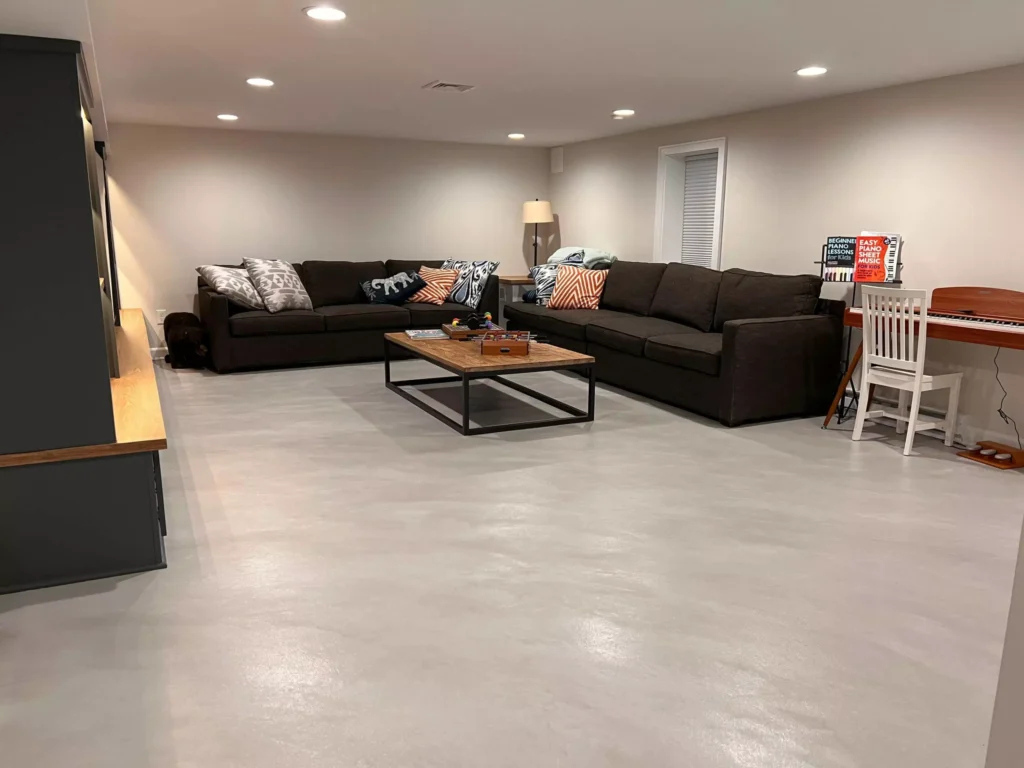
Advantages of Installing an Epoxy Basement Floor
1
Extreme Durability
Epoxy floors are known for their strength. They can withstand heavy foot traffic, impacts, and exposure to chemicals or moisture without showing signs of wear. This makes them perfect for basements that serve as high-activity areas.
2
Moisture Resistance
Humidity is one of the biggest challenges in basements. The epoxy coating creates a seamless protective barrier that prevents leaks, mold growth, and damage caused by condensation—helping preserve your foundation and air quality.
3
Easy Maintenance
Unlike other floors, epoxy requires minimal upkeep. Its smooth, sealed surface can be easily cleaned using mild soap and water. There’s no need for waxing, polishing, or reapplication for several years.
4
Custom Appearance
Epoxy flooring offers endless design possibilities. You can choose from a variety of colors, finishes (from high-gloss to satin), and decorative effects such as metallic swirls, terrazzo looks, or stone-like chips.
When planning epoxy floor décor, there are numerous creative and functional options to explore. According to The Architect’s Diary in “Epoxy Floor Design Ideas: 20 Creative And Functional Solutions” (2024), ideas range from metallic marble and 3D epoxy floors to terrazzo styles, geometric patterns, wood-look finishes, multicolored effects, and embedded objects—each balancing aesthetics with durability (thearchitectsdiary.com).
How Is an Epoxy Basement Floor Installed?
Installing an epoxy basement floor requires precision and expertise. Most professional epoxy flooring contractors follow these key steps:
Concrete Preparation
The process begins with deep cleaning and surface repair. Any cracks, dust, or grease are removed to ensure proper bonding. As One Stop Epoxy explains in “How Do I Properly Prepare the Surface Before Applying Epoxy?” (2023), the surface must be clean, dry, and free of contaminants like oil or dust (onestopepoxy.com). Proper preparation is the foundation of long-lasting result.
Application of Epoxy Resin
The epoxy resin and hardener are carefully mixed and applied using rollers or trowels in thin, even layers. Each layer must cure properly to ensure maximum strength and a flawless finish.
Decorative Layer (Optional)
To personalize the space, installers may add colored flakes, metallic pigments, or quartz for unique textures and depth. This step gives epoxy floors their signature high-end look.
Final Seal
A protective topcoat is applied to seal the surface. This step enhances the floor’s gloss, adds UV resistance, and increases its ability to withstand abrasion and impacts.
Creative Ways to Use Epoxy Floors in Your Basement
Epoxy flooring isn’t just practical—it’s an opportunity to redefine your basement’s purpose and style. Here are a few creative ideas:
- Home Gym: A non-slip, easy-to-clean surface perfect for workouts.
- Home Theater or Entertainment Room: Its glossy surface reflects light beautifully, enhancing a modern cinematic vibe.
- Office or Workshop: Durable and resistant to spills, tools, and rolling chairs.
- Storage Area: Protects against humidity and the pressure of heavy items.
You can also combine epoxy floors with LED lighting, modular furniture, or custom partitions to create a basement that’s both stylish and functional.
Basic Maintenance Tips for Epoxy Floors
One of the best things about epoxy flooring is how easy it is to maintain. To keep your floor looking its best:
- Sweep or vacuum regularly to remove dust and debris.
- Mop occasionally with mild soup and warm water.
- Avoid abrasive cleaners or acidic products that could dull the shine.
- Reapply the protective seal every 3–5 years in high-traffic areas.
With these simple steps, your epoxy basement floor will retain its glossy, like-new appearance for years.
Frequently Asked Questions About Epoxy Basement Floors
Can you epoxy a basement floor if it’s currently damp?
Yes, provided the surface is properly prepared. As basement flooring contractors, we use diamond grinding to open the concrete pores and apply a specialized moisture barrier epoxy that prevents peeling and bubbling.
Is epoxy better than tile or wood for a finished basement?
Absolutely. Wood and laminate warp with moisture, and tile grout lines trap dirt and mold. A seamless resin basement floor is hypoallergenic, easy to clean, and remains unaffected by New Jersey’s humidity.
How long does epoxy basement floor installation take?
A professional team can complete most residential basements in 2 to 3 days, ensuring a full chemical cure that a DIY project simply cannot match.
Durable Epoxy Basement Floors for Your Home
- Request your free quote today.
- Call us at (908) 644 9819
- Or schedule a no-cost site visit
Looking to upgrade your basement floor? At Forms Designs LLC, we install high-quality epoxy coatings that protect against moisture, cracks, and daily wear. Whether your basement is unfinished or outdated, we can turn it into a clean, durable, and modern space.